

For nearly two decades, story points have been a core part of Agile delivery practices. Teams used them to estimate complexity, plan sprints, and forecast delivery timelines. They were never perfect, but they were useful enough—especially in human-only workflows where effort, risk, and uncertainty were highly variable and difficult to quantify.
But the software development landscape has fundamentally changed. With the rise of Generative AI, the ways teams design, build, test, and deploy software are shifting faster than at any point in recent history. The traditional assumptions that made story points valuable no longer hold up. Instead of helping teams plan and deliver better, story points are increasingly becoming a drag—creating misalignment, unnecessary overhead, and outdated expectations about how work gets done.
As organizations embrace GenAI, it’s time to re-examine why we estimate work the way we do—and whether story points still add value. Here’s why many teams are moving away from story points, and what modern alternatives fit better with an AI-accelerated development environment.

1. Story Points Were Built for a Human-Centered Workflow—Not an AI-Accelerated One
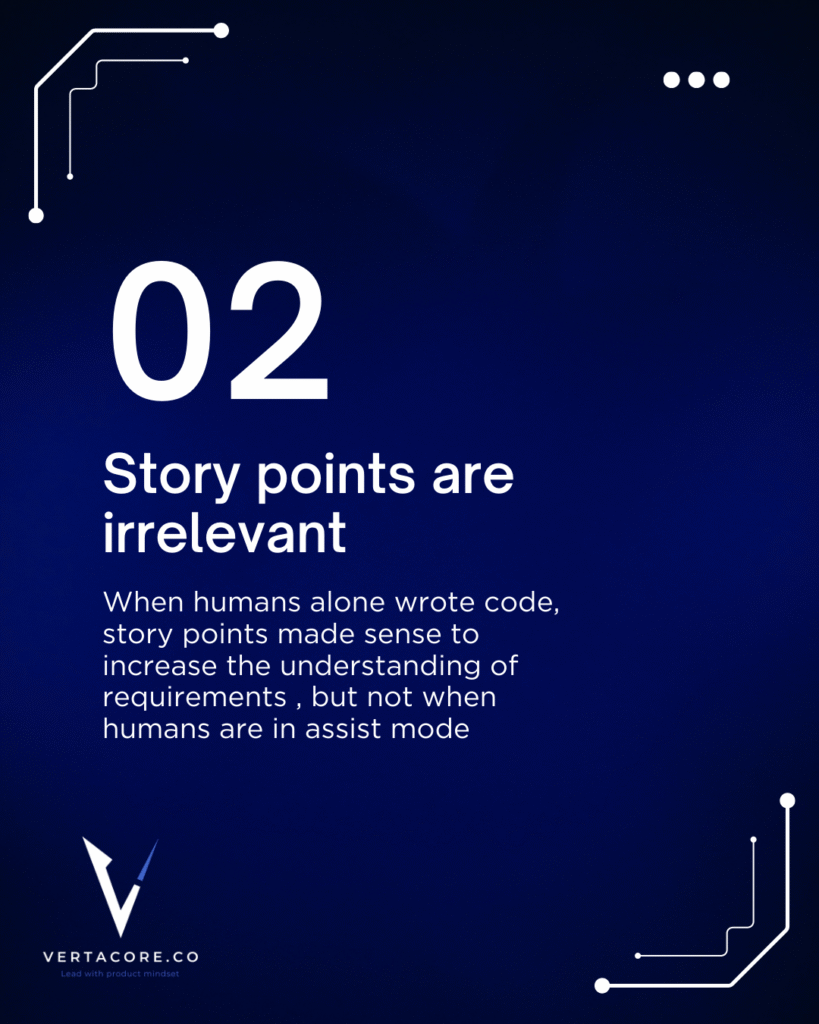
The original purpose of story points was to estimate relative complexity in a world where humans wrote most of the code, tested every scenario manually, and carried the entire cognitive load of understanding the system. A story that required 8 hours one week might take 16 the next if the team was tired, distracted, or unfamiliar with the domain. Humans are wildly variable in output, and story points helped smooth that out through relative estimation.
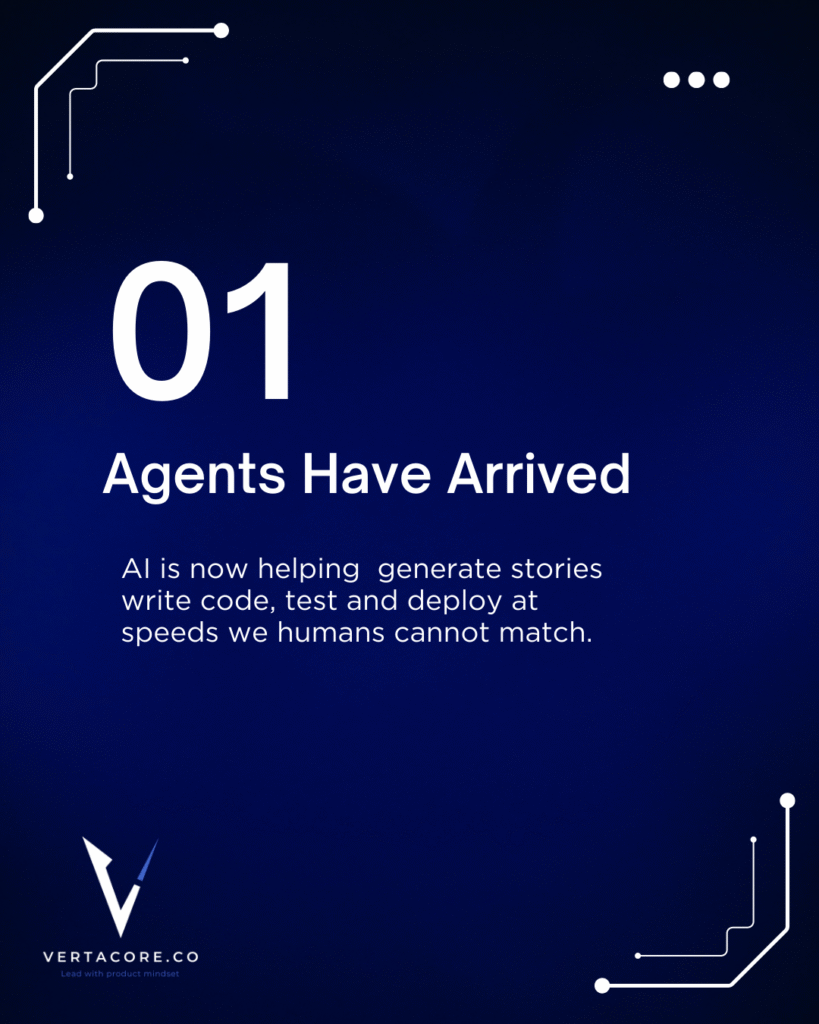
GenAI fundamentally changes this dynamic.
When a large portion of the coding, documentation, test case generation, or even architectural scaffolding can be done within minutes using AI tools, the variability between tasks shrinks dramatically. Work that might traditionally have been a “5-point story” can suddenly become a 1-point effort—or not even require story-pointing at all.
The speed and consistency introduced by AI means story points become a relic of a slower process. They simply weren’t designed for a world where:
- Code can be generated in seconds
- Unit tests can be produced automatically
- Developers rely on AI copilots for complex refactoring
- Entire feature scaffolds can be generated in a day
- AI eliminates much of the “unknown unknowns” via rapid prototyping and code analysis
In short: if the nature of the work changes, the way we measure the work must change too.
2. Story Points Reinforce Output Over Outcomes
In the age of GenAI, software organizations can’t afford to measure velocity—they need to measure impact.
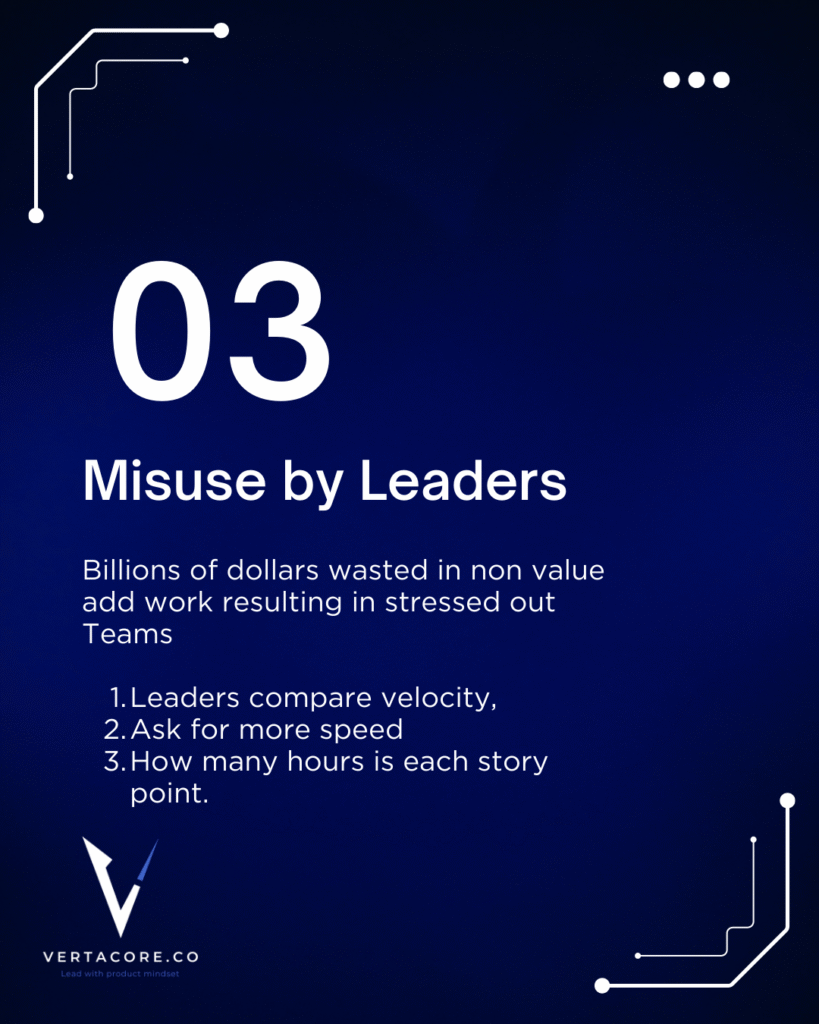
Story points tend to pull teams toward output-oriented thinking: How many points can we complete this sprint? This leads to classic anti-patterns:
- Teams inflate story points to show higher velocity.
- Leaders compare point velocity across teams (even though they shouldn’t).
- Sprints become more about “burning down points” than solving customer problems.
- Delivery becomes a numbers game, not a value game.
GenAI amplifies this problem. Since AI allows teams to deliver more code, story-point velocity may grow artificially, creating illusions of improved productivity. Organizations might celebrate higher point burn while missing the question that truly matters:
Are we building the right things?
When AI accelerates development, the real differentiator becomes what you build—not how fast you code it. Story points don’t help with measuring outcomes, customer value, product adoption, or learning—they only measure estimated effort.
In a GenAI-driven environment, that’s not enough.
3. Estimation Overhead Is Becoming a Wasteful Ritual
Story point estimation requires:
- Backlog grooming
- Planning poker
- Team alignment
- Anchoring discussions
- Relative sizing exercises
- Re-estimates when things change
This can consume hours—sometimes days—of team time every sprint.
But when AI accelerates coding from days to minutes, the ratio of estimation time to execution time becomes wildly distorted. Spending an hour debating whether something is a 3 or a 5 makes no sense when the code can be generated in 10 minutes.
Even worse, story points create the illusion that we can predict work accurately. In reality, AI makes tasks even more unpredictable—some work collapses to near-zero effort, while other work (especially integration, security, refactoring, or ambiguous business logic) remains complex.
Rather than trying to force-fit work into an outdated estimation framework, a more lightweight and adaptive approach is needed.
4. Story Points Don’t Capture the New Types of Work AI Introduces
AI changes the distribution of work. Developers now spend more time:
- Validating AI-generated code
- Investigating quality or hallucination issues
- Integrating multiple AI tools
- Ensuring security, privacy, and compliance
- Performing architectural oversight
- Fixing edge cases AI cannot handle
- Managing prompt engineering, training data, or fine-tuning
These tasks don’t neatly map to the “complexity/effort” model that story points were designed for. A 1-point “simple” code change may require extensive validation. A 13-point complex algorithm might now be generated automatically.
Story points were built for a world where the type of work was relatively uniform—humans writing code. In the GenAI landscape, work is heterogeneous, nonlinear, and less predictable, making story points increasingly misaligned with reality.
5. Better Alternatives Exist for AI-Enabled Teams
The goal isn’t to abandon estimation entirely—it’s to adopt methods better suited to modern workflows.
Here are alternatives many AI-forward teams are using:
a. Flow Metrics (Kanban-style)
Measure actual delivery performance:
- Cycle time
- Lead time
- Throughput
- Work-in-progress
These metrics reflect real delivery—not estimates.
b. Value-Based Prioritization
Shift attention to customer and business impact:
- Outcome mapping
- Opportunity sizing
- Cost-of-delay
- Product bets and hypotheses
AI accelerates building; the bottleneck shifts to deciding what to build.
c. T-shirt Sizing (Lightweight Complexity Buckets)
When teams still want relative sizing without story-point debates:
- S / M / L / XL buckets
- No numeric velocity
- Simpler planning
d. AI-Adjusted Task Breakdown
Break work into atomic tasks that AI can accelerate or automate. Estimate based on:
- AI-generability
- Integration complexity
- Human validation effort
These factors matter far more than abstract point estimates.
6. The Real Shift: From Predictive Planning to Continuous Adaptation
Story points assume a predictable, linear, human-driven workflow. But GenAI introduces nonlinearity, unpredictability, and compounding acceleration.
Instead of asking:
“How many points can we deliver in the next sprint?”
Organizations should ask:
- What problems matter most now?
- What can AI accelerate immediately?
- What must humans do?
- How do we minimize risk, waste, and rework?
- How quickly can we test value hypotheses?
The teams that win will be those that adapt continuously—not those that cling to rituals designed for a world moving much slower than today.
Conclusion: Story Points Served Their Purpose—But Their Time Has Passed
Story points were valuable when development cycles were longer, uncertainty was higher, and humans carried the full load of software creation. But GenAI has reshaped how we build, validate, and deliver software. The assumptions behind story points no longer reflect the realities of modern development.
Today, organizations need frameworks that prioritize outcomes over output, accelerate learning, reduce waste, and harness AI effectively. Story points—once useful—are now more often a barrier than a boost.
The teams that move beyond story points will spend less time estimating and more time delivering. They’ll shift focus from effort to impact, from velocity to value, and from predictability to adaptability.
And in the era of GenAI, that’s exactly where the industry needs to be headed.

Leave a Reply